
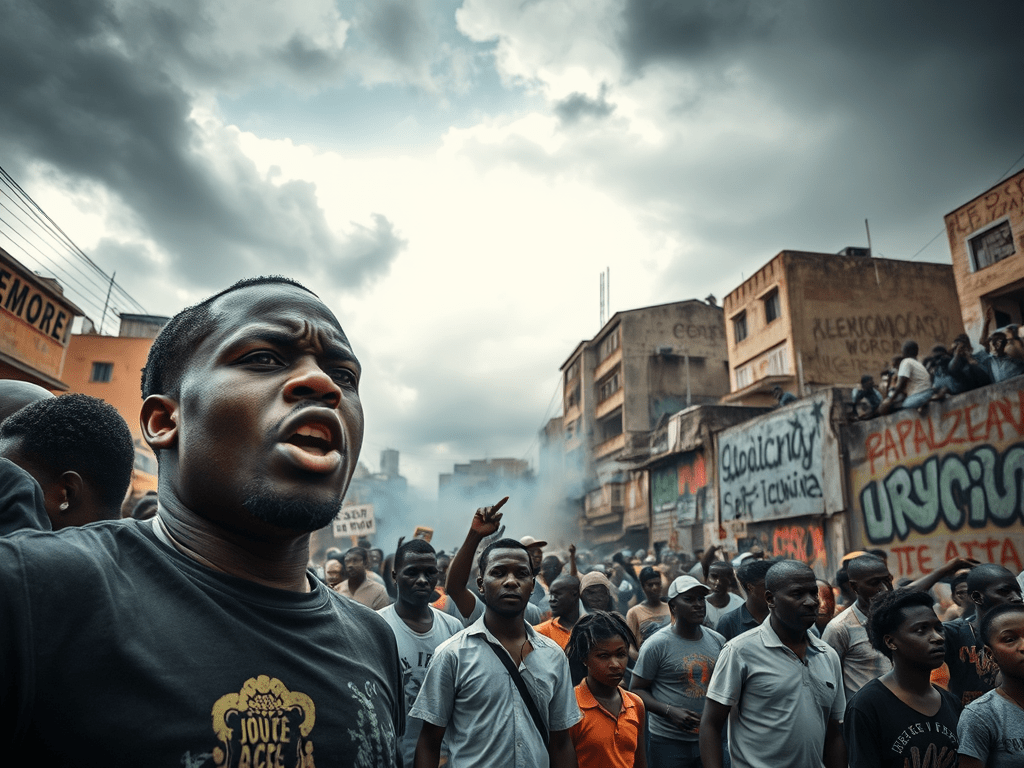
Cote d’Ivoire, or the Ivory Coast, has been in the news recently following disputed elections between incumbent President, Laurent Gbagbo, and challenger, Alasane Ouattara.
This once stable country has many people now asking how it moved from peace and stability to crisis. YOUR magazine set out to decipher into bite-sized pieces for all our readers the issues behind the conflict.
In the Beginning
Felix Houphouet-Boigny became the country’s first President in 1960.
With heavy French backing he ruled the country for 30 years until 1990 – the third longest serving ruler at the time after Fidel Castro and Kim Il-sung of North Korea. He ruled as an easy-going dictator but uniquely placed to shape the country.
Born a Muslim, he converted to Christianity. He then married a Muslim and belonged to two tribes: the Akouès and the Didiévi. He was thus able to unite the many tribes and different religions into a unitary state.
His health became increasingly fragile in the late 1980s and it was one of the protagonists in the current crisis, Alassane Ouattara, then Prime Minister, who administered the country from 1990. Houphouet-Boigny had rejected Ouattara before his death, favouring Henri Konan Bédié, who became his successor. Bedie’s ‘Ivoirity’ policy exposed the deep-seated tribal and religious tensions behind the unitary state that Houphouet-Boigny had created. Northern Muslims were excluded from political office and were regarded as foreigners or ‘in-migrants’.
This also meant that Bedie’s main rival, Alassane Ouattara, was excluded from running for President, because he had two northern Ivoirian parents. A large part of the Ivoirian population are people originating from foreign countries and this policy excluded many people with Ivoirian nationality. The relationship between various ethnic groups became strained as a result.
Social Tensions
Bédié also excluded many potential opponents from the army. In late 1999, a group of dissatisfied officers staged a military coup, putting General Robert Guéï in power.
A presidential election was held in October 2000, in which Laurent Gbagbo vied with Guéï; after some unrest Gbagbo ultimately won. Again, Alassane Ouattara was disqualified by the country’s Supreme Court, due to his alleged Burkinabé nationality.
This sparked violent protests, in which his supporters, mainly from the country’s north, battled with riot police.
Civil War
The divisions in the state eventually lead to civil war in September 2002, and northern rebels almost succeeded in taking over the country before France intervened. The rebels had taken control of sixty-nine per cent of the country.
A peace deal in 2002 brought the rebels into government, with Guillame Soro, one of the rebel leaders, as Prime Minister.
Elections were then planned, initially for 2005, but several postponements followed, leading to the disputed 2010 election.
The Current Crisis
Preliminary results announced by the Electoral Commission declared Alassane Ouattara the winner. The results were contested by Gbagbo at the Constitutional Council, which then declared Gbagbo the winner.
No one has been able to resolve the impasse – neither the Electoral Commissioner, the Constitutional Committee nor the United Nations. Economic sanctions and military action are now threatened by neighbouring ECOWAS states excluding Ghana.
Because the election has not unified the country as planned, many fear war will lead to devastating consequences, which will affect the entire region. A military option is also seen by many as unnecessary and against modern trends in conflict resolution. A negotiated settlement would seem to be the way forward, with Kenya and Zimbabwe seen as recent examples.
The challenges in Cote d’Ivoire did not start with this disputed election but with the legacy of division brought about by colonialism, the policy of Ivoirity dividing the nation, the presence of some of the opposition in government already, and a long wait for unifying elections.
The world waits but as Africans we must all plead, hope and pray for political dialogue until a solution is found.
Nii Armah Akomfrah
Political and Social Commentator/International Built Asset Consultant


 Your Magazine
Leave a comment